
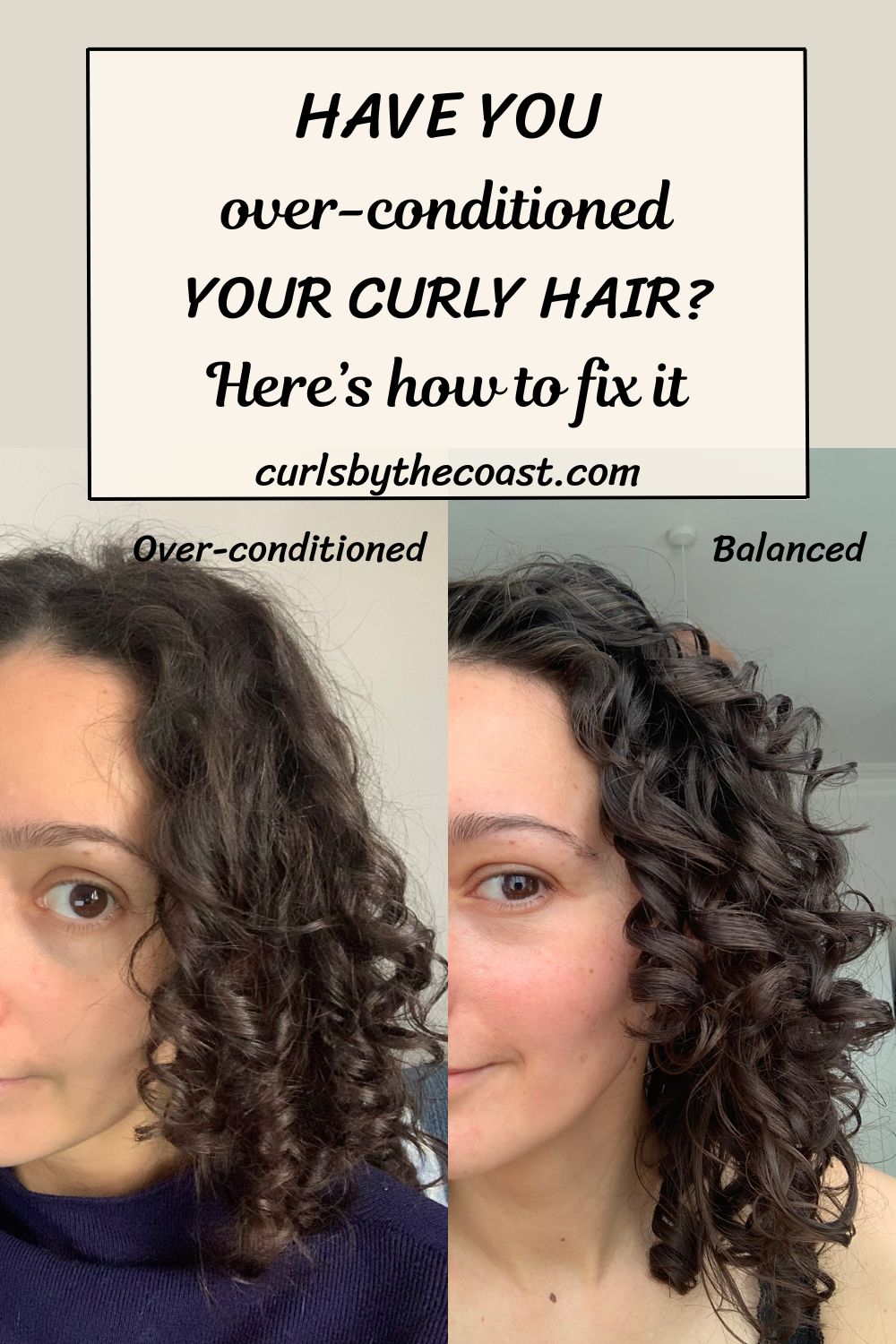
Are your natural curls limp, fluffy, and struggling to hold? The first assumption curlies make is that they need a hair mask, but on the contrary, your hair might be overconditioned…
Jump to:
- What is moisture overload?
- What causes over-conditioned curls?
- Signs your curly hair is over-conditioned
- How to fix over-conditioned hair
What is moisture overload in curly hair?
Overmoisturised hair, or moisture overload, is more accurately called overconditioning, because it’s just that – the presence of too many conditioning products on your hair. And while conditioners help smooth and protect the hair strands, when it comes to curly hair, overconditioning can negatively affect your curl structure.
What causes over-conditioned curly hair?
It could be a combination of factors causing your hair to be overconditioned, or it could just be one particular product in your routine.
Too many conditioning products
Lots of curly hair advice highlights the importance of co-washing, conditioning, deep conditioning, and styling with a leave-in or curl cream – but these are all conditioning steps, and for some hair types, and especially for fine hair, this can become overkill after a while.
Using products that are too heavy for your curly hair
Even if you’ve got a simple routine of shampoo, conditioner and gel, if you’re using products that have a lot of thick oils or butters in, this can also over-moisturise your hair. Brands like Cantu and Shea Moisture are examples of very heavy ranges that can weigh down certain hair types; their products often contain shea butter, castor oil, and multiple other oils all at once.
Using oils too much
Oils are used in haircare to lubricate our hair strands and add shine to hair, but again, too much oil can make curls too soft. The hydrophobic (water-repellent) qualities of oils mean that they can also prevent other products from penetrating the hair, or they can build up on the strands or scalp.
Soft water
Another factor that often causes my hair to be overconditioned is the fact that I live in a soft water area: soft water makes shampoos and conditioners more effective, which means you need less of the product for it to work effectively, and using too much might mean you struggle to wash it all out. Soft water can also soften your hair even if you’re not adding product, which can make some hair appear limp.
Signs your curly hair is over-conditioned
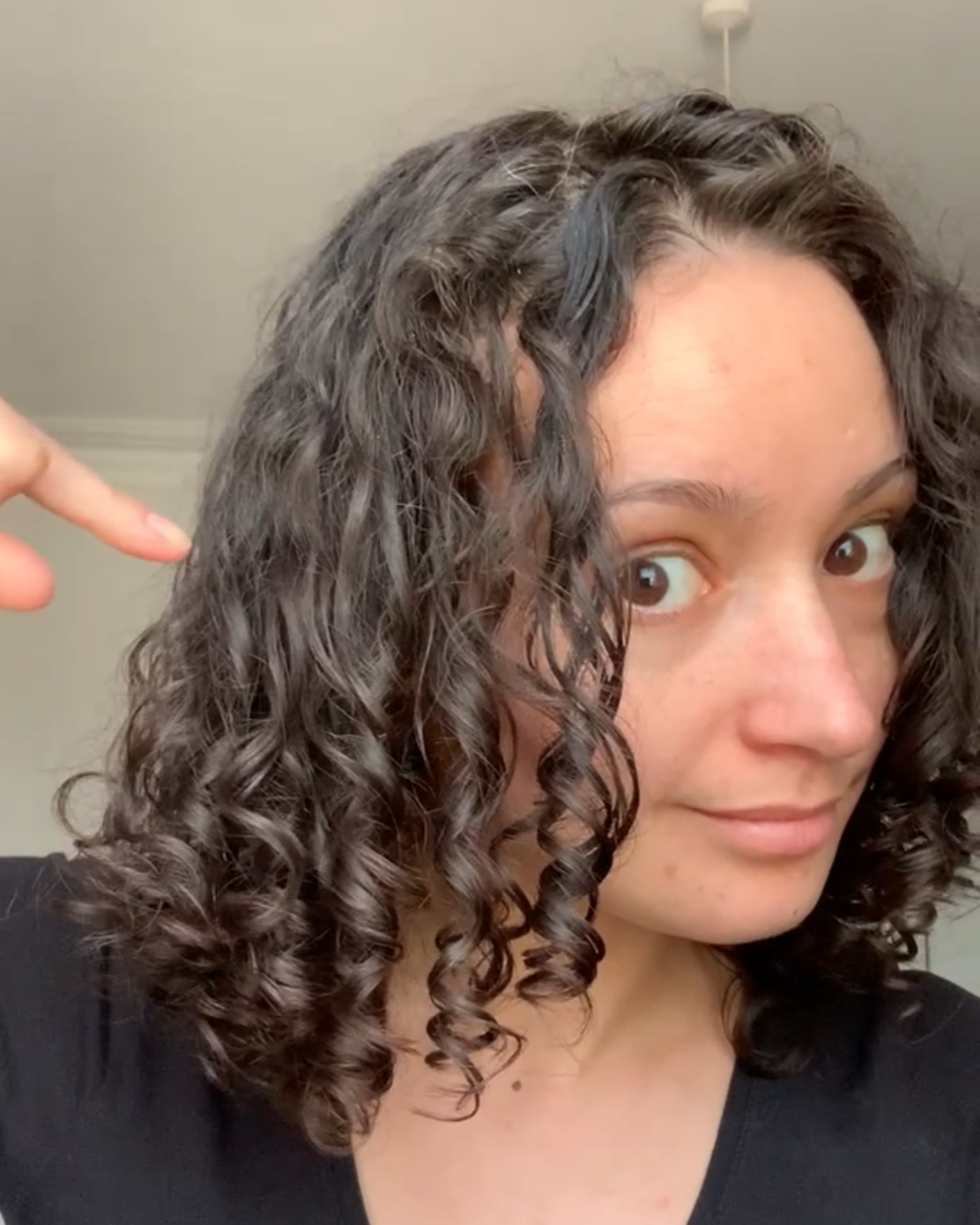
Your curls are struggling to hold
While overconditioning doesn’t damage the hair (unless your products are too heavy and causing you buildup), it can make curls feel too soft and look limp. Your curls might look fine on washday, but quickly fall flat the next day or even a few hours later – even if you’re using a hard hold styler.
Your hair strands are too stretchy
Hair strands have a certain amount of elasticity to them, but on overconditioned hair, when you pull a single hair strand, it might stretch too much before breaking.
Your hair feels gummy or mushy
Your hair feeling kind of squishy when it’s wet is another sign of too many moisturising products coating your hair strands.
You’re getting lots of extra halo frizz
Most people think frizz is caused by dry hair, but if your hair is struggling to hold its structure due to overconditioning, this can cause a lot of soft halo frizz to appear.
Your routine isn’t working the way it used to
Do you have a trusty washday lineup that suddenly isn’t giving you the results you’re used to? Perhaps you’ve overdone it on the conditioning front, and need to tweak your routine a little.

How to fix over-conditioned hair
Start by clarifying
Your first port of call should always be to clarify your hair, to shift any potential buildup and start on a clean slate. You might find that’s all you needed to get your routine back on track, but if something still seems off, it’s time to tweak the rest of your routine.
My favourite clarifying shampoos:
Philip Kingsley Body Building shampoo – Amazon UK | Amazon US | LookFantastic (use discount code LFTFCOAST) | Marks & Spencer | Philip Kingsley website
Noughty Detox Dynamo – LookFantastic (and use code LFTFCOAST) | Boots UK | Amazon | Noughty website
Use fewer conditioning products
This means either cutting out your leave-in and/or curl cream, or deep conditioning less often. If your curls are healthier than they used to be, they may not need this level of conditioning any more.
Use less conditioner
Less is more, I promise! Rather than assuming you need huge palmfuls of conditioner (unless you have very long or thick hair), try using smaller amounts, add a trickle of water once it’s applied to help distribute it, and see if you can detangle your hair just fine with this smaller amount. When conditioning, it’s a good idea to add a little more water before more conditioner, and squish your hair up to your roots to help distribute the product throughout your hair.
Switch to lightweight products
Switch to a more lightweight conditioner, shampoo, or styler, that contain little or none of those heavy ingredients mentioned further up. If your shampoo is very moisturising, try one that’s a little stronger (or clarify as mentioned above) so that the bulk of your conditioning comes from your conditioner step. You could even use your leave-in conditioner in place of your rinse-out conditioner, as leave-ins are formulated to be lighter. And instead of styling with cream+gel, try styling with two gels instead, to ensure that extra hold.
My favourite lightweight brands:
JSL Essentials Haircare Essentials (get 15% off with code COAST15)
TréLuxe 360 Curls Collection
Umberto Giannini Curl Jelly range (get 20% off with code COAST20)
Incorporate protein
Protein ingredients can help add strength and structure to curls – but a lot of products marketed as “repairing” actually have even more conditioning ingredients in and very little protein. Look for hydrolysed wheat/soy/rice protein or keratin high up your product’s ingredients list to be sure you’re getting the right benefits. Alternatively, try a strong protein treatment like the Aphogee Two-Step Treatment, or add protein drops to your existing products like the ones from Boucleme mentioned below. This way, you can control the amount of protein you add to your routine.
My favourite proteiny hair products:
Bouclème Protein Booster – shop on the Boucleme website (and get 15% off with code COAST15) | Amazon UK | Amazon US.
Hair Dance Strengthening Growth Conditioner – shop on their US website (use code 10NATALIE44 for 10% off) or check out their international stockists
Curlsmith Bouncy Strength Volume Foam – buy direct from the Curlsmith website | LookFantastic (and use code LFTFCOAST for 20% off) | Boots UK | Amazon UK | Amazon US
Bounce Curl Light Creme Gel – Shop on the Bounce Curl US Website (use code CURLSBYTHECOAST10 for 10% off) or check out their international stockists
And don’t worry about so-called “protein overload” – this is also a type of buildup, so clarifying and switching to a protein-free routine should sort it right out. I talk more about the protein-moisture balance in this blog post!
Watch me fix my overconditioned hair in one washday:
 Curls by the Coast
2 responses to “Can you over-condition curly hair? Signs of moisture overload and how to fix it”
thankyou this article is very relatable for me I am going to lay off the deep conditioner which I use dollops of and hope I get my curl structure back and rid of the frizz.
LikeLike
Oh my, this must be the reason I’ve been struggling so much with my hair this last year. I completely recognize my curls in this depiction, they exactly look like yours on the first picture! Thank you so much for sharing that content, I’ll try your advices and see if my hair improve.
LikeLike