
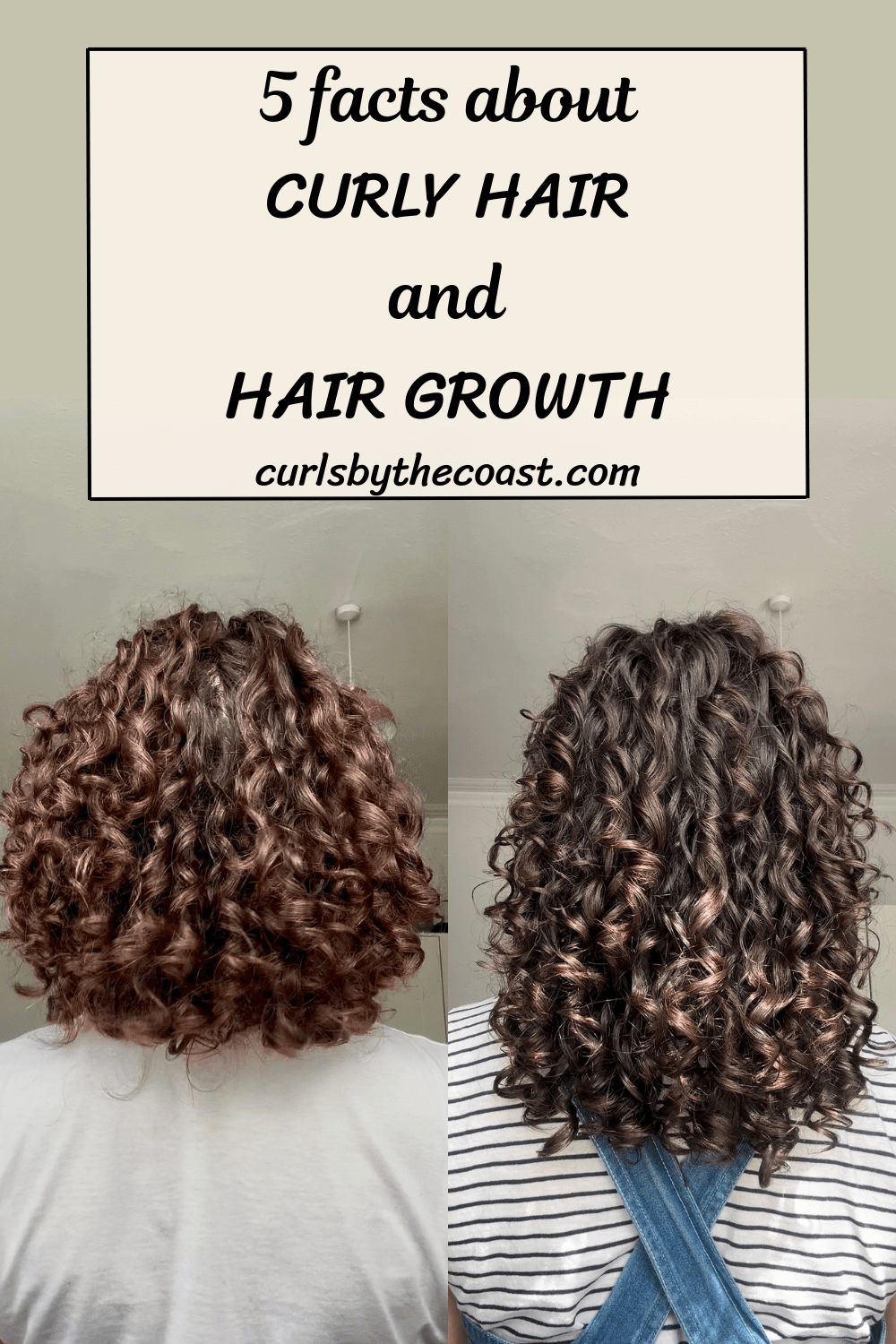
Do you wish you could have longer hair? You might be wondering how to encourage hair growth, especially when you have curly hair that springs up and makes it look shorter than it is!
There are hundreds of hair products out there that promise to boost hair growth, but unfortunately, there is more to hair growth than simply finding a miracle product to massage into your scalp…
- The maximum length your hair can grow is partly genetic
- Some curls curl better when they’re short
- Your diet is just as important as your hair products
- That famous rosemary oil study is kinda sketchy
- Stress stops hair growth and causes excess hairfall
The maximum length your hair can grow is partly genetic
The thickness, colour, and texture of our hair is genetic, as are balding patterns and how early you’ll turn grey. But the rate at which your hair grows is also partly genetic too.
Each of our hair strands grow in a cycle: the Anagen (growth) phase lasts up to 3-5 years, and even up to 7 years for those of Asian descent. Once the hair strands stop growing, they move into a 10-day transitional phase (Catagen), before moving to the resting phase (Telogen) where your hair is still in the follicle but is no longer growing, and then the strand finally naturally falls out after 90-100 days (Exogen phase).
This variation in this growth cycle length means that some people will have an easier time growing their hair down to their waist, and for some people it will either take them longer, or their hair just naturally can’t grow very long.
Some people also experience breakage the longer their hair gets, so sometimes, it’s better for your hair health to have regular trims rather than keep trying to grow it longer. Speaking of trims…
Some curls curl better when they’re short
My curl pattern is tighter at the bottom than the top, and the longer my hair grows, the more my roots get pulled down. So although my hair perhaps could grow longer than the length I keep it at, my hair curls less as it gets longer.
When I cut my hair to shoulder length, it becomes lighter and can bounce up more easily, and my curls form back into ringlets.
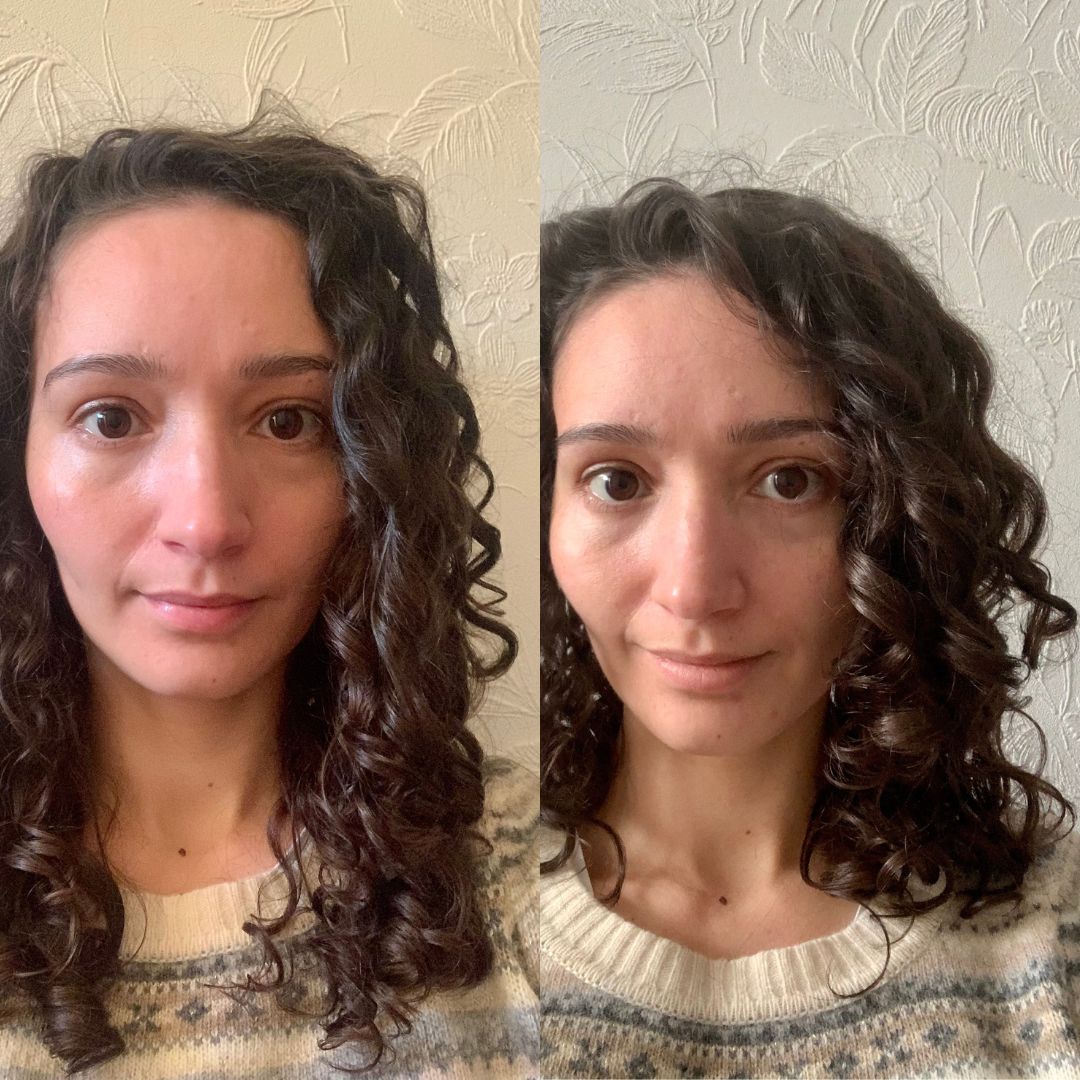
While you should of course wear your hair in whatever way makes you happy, it is worth bearing this in mind if you are thinking about changing the length of your hair: some curls need length to curl, whereas others need that shortness and lightness to maintain a better curl pattern.
Some curlies also get more straggly ends the longer their hair gets, or experience more breakage.
While you can protect your ends with certain stylers and oils, it can be a sign that your hair just isn’t happy at that length.
Your diet is just as important as your hair products
There’s more to healthy hair than the products you use. Instead of buying the next viral scalp serum, it’s a better use of your time to look at your diet if you want to improve your hair growth.
Poor nutrition is linked to slow hair growth as well as hair loss.
For best cell function (and therefore boosting your chances of hair growth), you need vitamin C, vitamin D, omega 3s, biotin (vitamin B7), and zinc in your diet. Hair loss has also been linked to low iron, and iron deficiencies are especially common during menstruation or for vegetarians and vegans.
And as the hair is made of protein, ensuring that you have enough protein in your diet is also important for strong and healthy hair that is less likely to break.
Make sure you are eating a balanced diet and, of course, staying hydrated! If you think you have an underlying issue that might be causing hair loss, be sure to discuss it with a doctor.
That famous rosemary oil study is kinda sketchy
Pretty much every hair product that contains rosemary oil or even rosemary water will say that it helps boost hair growth, and it’s all because of a single study: Rosemary oil vs minoxidil 2% for the treatment of androgenetic alopecia by Panahi et al.
If you just read the abstract of this study, it sounds promising: “The findings of the present trial provided evidence with respect to the efficacy of rosemary oil in the treatment of AGA.” [AGA stands for androgenetic alopecia, aka male pattern baldness].
However, there’s a reason why reading the abstract of a study is not enough to get the full picture.
The study suggests that rosemary oil is as good as minoxidil for treating androgenetic alopecia, but once you get into the methodology of the study, this conclusion kind of falls apart a bit.
According to cosmetic chemist Dr Michelle Wong, aka Lab Muffin Beauty Science, who has a blog post that does a deep dive into this study, this study is actually “terrible” (her words, not mine).
Here are some of the issues she identified with it:
- The methodology is bad: the 2% minoxidil used in the trial is not actually a big dose of minoxidil to use for hair growth – dermatologists tend to prescribe at least 5%, so comparing rosemary oil to such a small amount makes the results less significant. Also the study took place over 6 months, which is not a very long time for hair growth studies.
- The study is full of typos and the numbers are wrong in multiple places: it says that at the start of the study AND 3 months later, the hair counts were 122.8±48.9 in the rosemary group, and 138.4±38.0 in the minoxidil group. According to Dr Wong, Having both numbers be exactly the same both times is “basically impossible” given that we are constantly going through a cycle of natural hair growth and shedding. There are lots of other numbers that don’t add up too.
- The actual rate of hair growth is…not impressive: and the increase in hair growth shown could be down to normal seasonal changes in hair growth, or the fact that the participants were also massaging their scalps throughout, no matter what they put on their heads.
- Even if the study was good, it only looks at this one type of hair loss: so it doesn’t mean the results would work for all types of hair growth or hair loss.
In all, despite the marketing appeal, there is still not enough evidence around rosemary oil being a definite fix for hair growth. Save your money and adopt other scalp health practices instead!
Stress stops hair growth and causes excess hairfall
When we are going through high stress, our heightened adrenaline and cortisol levels pushes more hair into the resting phase and stops the hair’s growth cycle. A few months after the stressful event, it starts again, and you end up losing larger amounts of hair than usual (this is known as Telogen Effluvium).
It’s MUCH easier said than done, but finding ways to reduce your stress will help your hair growth. Things like getting enough sleep, making time for mindfulness activities, and maybe not doom-scrolling so much are some good places to start.
In all, growing your curly hair is not as easy as throwing a new scalp serum at it. For the best chance of hair growth, be sure to nourish your insides too with a good diet and lowering stress, as well as looking after your scalp by keeping it free of buildup and avoiding high tension and friction (e.g. tight updos and hair accessories). You may also need to adjust your expectations about how much your hair can grow as well. But if your healthy choices lead to healthy hair, maybe you’ll grow to love it no matter what length it is!
For more about improving the health of your curls, check out 5 signs your curls are due for a trim and Why clarifying is important for curly hair.
References
Natarelli, N., et al. (2023). Integrative and Mechanistic Approach to the Hair Growth Cycle and Hair Loss. Journal of Clinical Medicine, 12(3), p.893. doi: https://doi.org/10.3390/jcm12030893.
Guo, E.L. and Katta, R. (2017). Diet and hair loss: effects of nutrient deficiency and supplement use. Dermatology practical & conceptual, 7(1), pp.1–10. doi: https://doi.org/10.5826/dpc.0701a01.
Panahi, Y., et al (2015). Rosemary oil vs minoxidil 2% for the treatment of androgenetic alopecia: a randomized comparative trial. Skinmed, [online] 13(1), pp.15–21. Available at: https://pubmed.ncbi.nlm.nih.gov/25842469/
 Curls by the Coast
Share your thoughts…