

Chemotherapy is scary-enough thing to go through, without the added stress of Chemotherapy-Induced Alopecia – losing your hair – as a side effect.
Thankfully, science is amazing, and a method called scalp cooling has been developed to try to slow or reduce the amount of hair loss during the chemotherapy process.
As my mum is currently going through this herself, I did a little dive into how it works, and who it might work for.
What does scalp cooling involve?
Scalp cooling, or cold capping, is a way to reduce the amount of hair lost during chemotherapy by reducing the temperature of your scalp while you are receiving the treatment. This reduces the blood flow to the hair follicles, which in turn reduces the amount of chemotherapy medication that reaches the scalp.
Around 30 minutes before the patient starts their chemotherapy, their hair is wet down and leave-in conditioner is applied to the hair to help the cap’s contact. Then, a silicone cap is put on the head, which is attached to a machine that will pump liquid coolant throughout the cap for the duration of the treatment. A neoprene cap is put on top of this, to help with insulation and to ensure the cap is tightly fitted to the head.
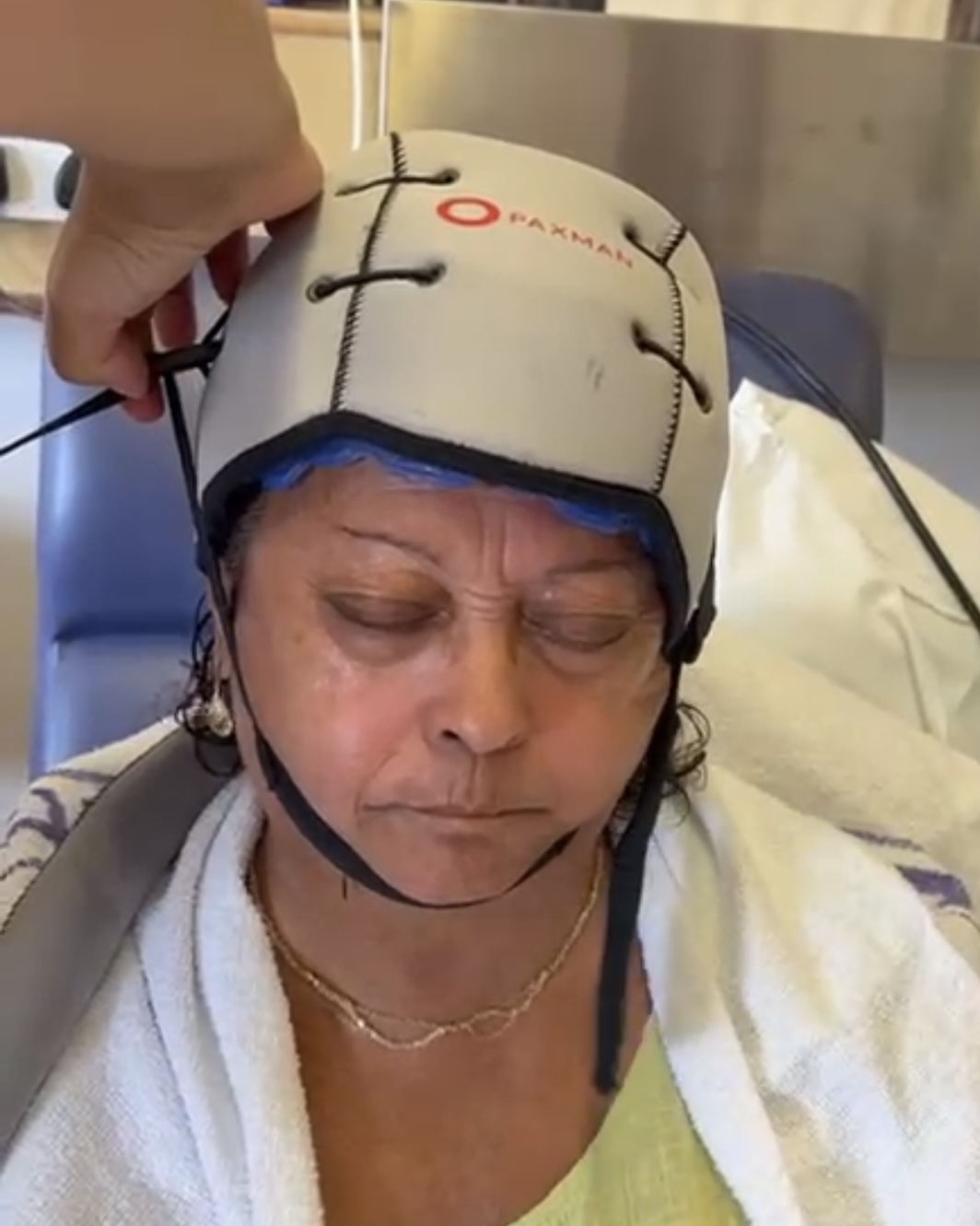
Some institutions offer a gel cap instead of the liquid coolant cap; this is a cap that has been pre-frozen and needs to be swapped out throughout the treatment to keep the head cold.
The patient must keep the cold cap on for 90 minutes after they have finished their chemotherapy, to make sure their scalp is sufficiently cooled – but they can briefly detach the cap if they need to get up (e.g. to go to the toilet).
What does the science say?
There have been lots of studies that show that scalp cooling is effective in reducing the amount of hair lost during chemotherapy.
A 2017 study by Rugo et al found that the use of scalp cooling was associated with less hair loss at 4 weeks after the last dose of chemotherapy, while a randomised clinical trial by Nangia et al found that success was reported in 50.5% of women undergoing breast cancer treatment, compared to 0% in the control group.
A systematic review and meta-analysis by Shen, Ru and Yao concluded that compared to control group patients, those that received scalp cooling had a 41% lower risk of alopecia.
However, it was also found that results may vary depending on the type of medication used in the chemotherapy, the dosage, and the type of cancer that the patient has.
What are the side effects?
The most common side effects reported during the scalp cooling include:
- Experiencing the cold, and discomfort from the cold
- Ice forming on the hair after the session
- Headaches caused by the cold, and forehead pain caused by the tightness of the cap
- Dizziness or light-headedness
- Nausea (anecdotally reported)
- Dry scalp (also caused by the chemo)

Does it work for all chemotherapy patients?
There are a few cases where scalp cooling is not recommended, such as if the patient has a blood cancer (myeloma, leukaemia or lymphoma), or if they are very sensitive to the cold.
It’s also not recommended if you are going to have radiotherapy on your scalp, or if you need to have continuous chemotherapy through a pump or by taking tablets – because it would be impossible to wear the cold cap for such long periods.
What does this mean for curly hair??
This is a curly hair blog, after all – what can you expect if you are undergoing chemotherapy and you have curly hair?
If you have very thick or afro-Caribbean hair, you may need to cool your scalp for an additional 15 minutes before your chemotherapy starts (so 30 minutes in total) to ensure that the cold is getting through.
Both the chemotherapy and the scalp cooling can cause a dry scalp, so it’s best to use very gentle shampoos, without sulphates or fragrance, and ensure your hair is well-conditioned in the weeks following the treatment. Using a light oil on your scalp before washing your hair will help your scalp not get too stripped by washing.
As you will still experience some thinning or hair loss in the weeks following your chemotherapy, it’s important to avoid too much pulling or tightness on your hair, while still allowing the loose hairs to fall so that they don’t become tangled. Gently detangling your hair with your fingers every day is recommended – this does break up your curl pattern, but it will stop the loose hairs from becoming matted.
It is also recommended that you avoid using styling products such as mousses and gels during scalp cooling, simply because they can potentially make your hair more “sticky” and harder to wash and detangle. Using straighteners is also not advised, as these would pull the hair as well as damage it with the high heat.
In all, the idea is to treat your hair as gently as possible while keeping it well-conditioned, to let any loose hairs fall freely without causing extra stress to your hair follicles.
Paxman, whose scalp cooling units are used in hospitals around the world, have a blog containing more haircare tips to follow before and after your scalp cooling.
Product recommendations
This section contains some affiliate codes.
My mum was kindly gifted Philip Kingsley’s No Scent, No Colour shampoo and conditioner, which Philip Kingsley formulated specially for his wife when she was battling breast cancer. Buy them on LookFantastic (UK/IRE) and get up to 20% off with my affiliate code LFTFCOAST, buy direct from their website, or find them on Amazon (USA).
She also brought her own leave-in conditioner to her appointments rather than using the hospital’s own: she likes TréLuxe Untie the Knot, which now comes in a fragrance-free version. Get 15% off when you buy through this link.
 Curls by the Coast
Share your thoughts…