
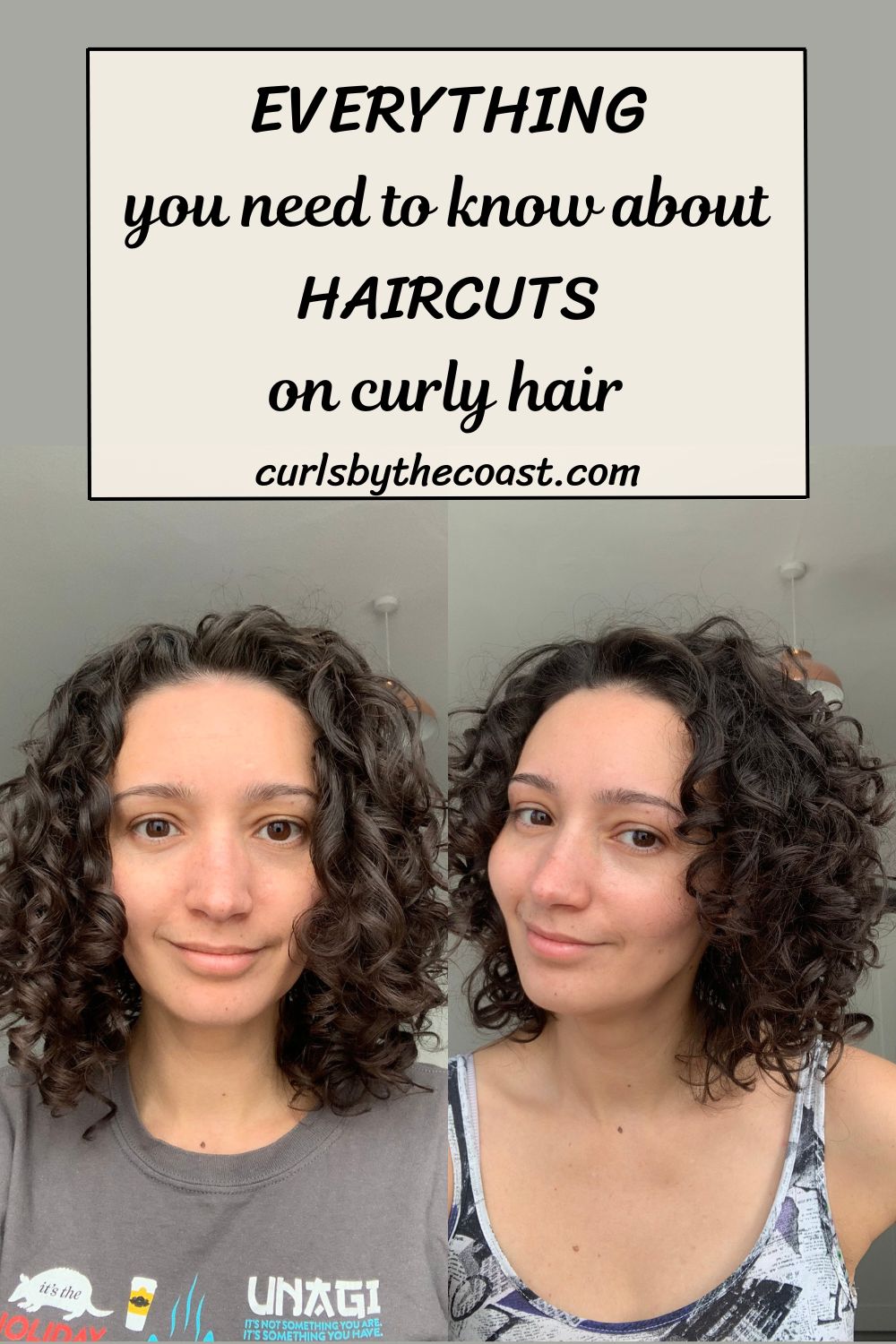
How does a curly cut differ from a “regular” cut? What should I ask my stylist for? And why are they so damn expensive? Below, I answer some of the questions I get asked the most about curly cuts.
And if you aren’t sure if your curls even need a trim yet, check out my blog post 5 signs your curls are due for a trim.
Jump to:
- Is a curly cut necessary for curly hair?
- What’s the difference between a Deva cut, Rezo cut and Cado cut?
- Can a regular hairdresser cut my curly hair?
- What do I ask my stylist for when getting a curly cut?
- Should I have a dry cut or a wet cut?
- What’s the best way to prep for curly cuts?
- What are the red flags to look out for when going to a new salon?
- Should I get short layers with my curly hair, or keep it all one length?
- How to find a curly hair stylist?
- Can I cut my own curly hair?
Is a curly cut necessary for curly hair?
Curly cuts can definitely be more expensive than regular cuts, usually because there is extra training involved in looking after curly hair (that annoyingly, isn’t often part of a standard hairdressing course).
You don’t have to go to someone who is “qualified” in a special type of cut (like the ones below), but it is a good idea to get a haircut that takes your curl pattern into account rather than a standardised one for straight hair. This is because curls simply fall differently compared to straight hair, so your curls may be missing out on some bounce and movement if you get a cut that is designed for straight hair.
Of course, if you want to still be able to wear your hair straight occasionally, then your cut should also allow for that, so be sure to discuss it with your hairdresser.
What’s the difference between a Deva cut/Rezo cut/Cado cut/Ouidad cut?
There are many different curly cuts with special names nowadays, and it can be a bit confusing to understand the difference! Check out this post for some of the main differences, as well as links to some of their results.
Can a regular hairdresser cut my curly hair?
This will depend on their own experience and how much you trust them – so it’s best to discuss with a regular hairdresser how they feel about cutting curly hair. They don’t need to be qualified in one of the cuts mentioned above in order to be able to cut curly hair, but I would definitely ask if they are familiar with cutting and styling your hair type (without immediately straightening it after).
What do I ask my stylist for when getting a curly cut?
The best way to start discussing with your hairdresser is to tell them about your hair and the issues you have, so that they can suggest a solution that will work best for you.
For example, I tell my hairdressers that my roots start to get flat and pulled down when my hair gets long, and my curls start looking a bit triangular, so they usually know that the way to fix that is to reintroduce shorter layers and a shorter length to give it more volume and a lighter feel. In general, a rounded/U shape is good for curls, so you could start with that even if you aren’t sure about layers.

Another good idea is to bring inspiration pictures in with you showing the type of shape you’d like. But make sure you choose photos of hair that closely matches your own curl pattern, if you don’t want to be disappointed. If you have fine hair and you bring in a photo of a haircut done on coarse, thicker hair, you just aren’t going to achieve that same structure. Hopefully, your hairdresser will be able to manage your expectations in that department too.
Should I have a dry cut or a wet cut?
This is down to your personal preference, as well as how long your hair is and how much your curls spring up once they’re dry.
I prefer a dry cut because it gives me a better idea of how it’s going to look when it’s styled, and my curls spring up quite a lot between being wet and dry. But I know lots of curlies who have very successful wet cuts, including Victoria, aka @curlycooper26 (see below) who gets her hair cut by her mum!
A wet cut could also be useful if you want to blowout your hair or wear it straight sometimes, so then you’ll know that the layers won’t look uneven once it’s straight.
What’s the best way to prep for curly cuts?
Some hairdressers will tell you to come with no styler in your hair, but because I usually do wear my curls with styler in my hair and that affects how it springs up, I tend to style my hair as normal the day before. The next day, I can’t feel the product in my hair, but it is falling more naturally in the way that I will usually wear it. Double check with your hairdresser if you’re not sure, and use the products you most often reach for – don’t start experimenting with new products or styling techniques the day before a cut!
What are the red flags to look out for when going to a new salon?
Asking if they can straighten your hair, or complaining about how “unmanageable” your hair is, is pretty unprofessional imo, and suggests that they are only really comfortable cutting straight hair.
Another no-no is getting out the thinning shears: if someone approaches you with thinning scissors, run away! Thinning shears are used on straight hair to give it a little more texture and to soften the ends, but on curly hair, that thinning effect can destroy the structure of your curl and even introduce more frizz. Because our curls naturally clump together in little families, they should be cut together, too. No thinning necessary!
I would also be wary of stylists insisting that you need to buy their products, or only salon-quality products, in order to have nice curls. You can look after your curly hair and get great results no matter what your budget, and while some products are expensive because they’re good quality, it doesn’t automatically mean that all your hair troubles will be solved once you throw enough money at it!
Should I get short layers with my curly hair, or keep it all one length?
This is a matter of personal preference, as well as thinking about what your own curl type and hair density is like. Some people recommend that curlies with lower-density hair get a blunter cut, as any short layers is going to make your hair look even thinner.
But on the other hand, my hair is both low-density and the curls are bottom-heavy, which means I benefit from some shorter layers so that the weight isn’t all around the bottom. Likewise, if you have lots of very thick hair, your stylist is going to need to make sure they can shape your curls well so that you don’t get that step/blocky effect.

How to find a curly hair stylist?
The best place to start is to google “curly cuts + [your town/area]” and see what comes up. This will hopefully give you some reviews to read, too!
If you’re in the US, you can also try putting your location into curlmaps.com and seeing if there’s a curly stylist near you.
Instagram is another good resource; you can use their search function to look for “curl specialist + [location]”. Plus, @welshiecurlgirl has a post with a big list of curl salons all over the world.
Can I cut my own curly hair?
You definitely can, but you’d be a braver person than I! There are a few DIY curly haircut methods that have been developed, including the pigtails cut and the butterfly cut.
Manes by Mell‘s YouTube channel is a great resource for cutting your own curly hair, and so is Marisa’s Curls, who always cuts her own hair.
But before you get all scissor-happy, I would definitely recommend watching a few videos, making sure you have some sharp hairdressing scissors, and again, seeing how these cuts look on someone with a similar curl pattern to yours.
If you’d like more visual aids, check out this haircut I had at David & David Hair Salon in Plymouth, UK, where I talk about the issues I was having with my hair and what I asked my stylist for. I hope this helps you navigate getting a curly cut a little better – if you have any more questions, feel free to leave a comment!
//www.instagram.com/embed.js
 Curls by the Coast
Share your thoughts…