
Jump to:
I used to be quite hesitant to admit that I don’t strictly follow the Curly Girl Method – after all, an awful lot of curlies (and wavies) get into looking after their hair through that route, and there seems to occasionally be a bit of gatekeeping in the curly community recently about the “right” way to look after your hair.
I personally think that while the Curly Girl Method is a great place to start if you aren’t sure where to begin with embracing your natural hair, if you choose to deviate from it once you get to get to know your hair a bit better – go for it. No-one’s going to arrest you!
Also, everyone has different hair textures, skin types, lifestyles, lives in different climates, and has different financial situations, so it’s impossible to have a one-size-fits-all-approach.
As for me, I’ve found that the more I understand the science behind haircare methods, products and ingredients, the more I understand what my own hair likes. Not that it has revealed all its secrets to me yet!
So let’s take a look at the Curly Girl Method rules, and why they may or may not work for you.
What is the Curly Girl Method?
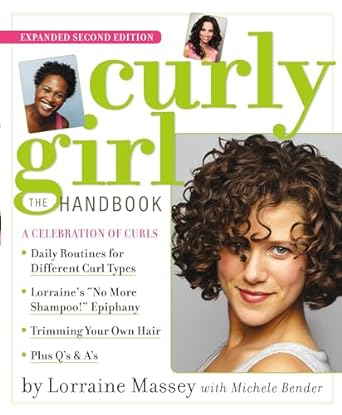
The Curly Girl Method (CGM) was coined by Lorraine Massey, who released Curly Girl: The Handbook back in 2010 and now runs a salon in New York and her own product line. Some of the techniques described in Massey’s book are reminiscent of the natural hair movement of the 1960s, a movement that inspired Black people to stop chemically relaxing their hair and to embrace their natural texture.
The Curly Girl Method has become more and more popular, and there is now a huge range of brands and products catering to curly hair and claiming to be “CGM-friendly.” But what does Lorraine Massey’s original method involve?
The CGM rules
No sulphates or foaming shampoos
Oh, yes – Massey’s Curly Girl Method does away with any kind of lathering cleansing on your scalp. She says that sulphates (such as sodium laureth sulfate or sodium lauryl sulphate) and other harsh detergents found in regular shampoos strip too much oil from the scalp and cause dryness. In her book, she instead instructs you to clean your scalp with either a non-foaming sulphate-free shampoo, or a botanical conditioner (i.e. containing plant-based ingredients high up the ingredients list).
No silicones
Silicones (often the ingredients that end in -cone: dimethicone, cyclomethicone, dimethiconol, etc.) are not allowed in the CGM because they can build up on your hair, and some are not water-soluble so may require a stronger cleanser to wash out (and stronger cleansing is not allowed – see above!).
No brushes or combs
Massey encourages you to only use your fingers to detangle your hair, and only when it’s covered in conditioner. She says brushes and combs “damage the hair by making the cuticle rough and scaly“.
No drying alcohols
Some products containing alcohols are considered too harsh for curly hair, as they can remove moisture from the hair and cause frizz.
No heat
The Curly Girl Method tells you to get rid of all your heat tools, straighteners, hot brushes – except for your diffuser, which you can use on low-medium heat.
How I break these rules
We often forget, while we’re getting bogged down with all these curly techniques, that the aim of the Curly Girl Method is to minimise damage to the hair cuticle, keep your hair well-conditioned, and accentuate your natural curl pattern, however it may grow. And that’s all great! Unfortunately, some curlies find themselves stressing too much about sticking staunchly to the CGM, even when their hair (and scalp) is going from bad to worse.
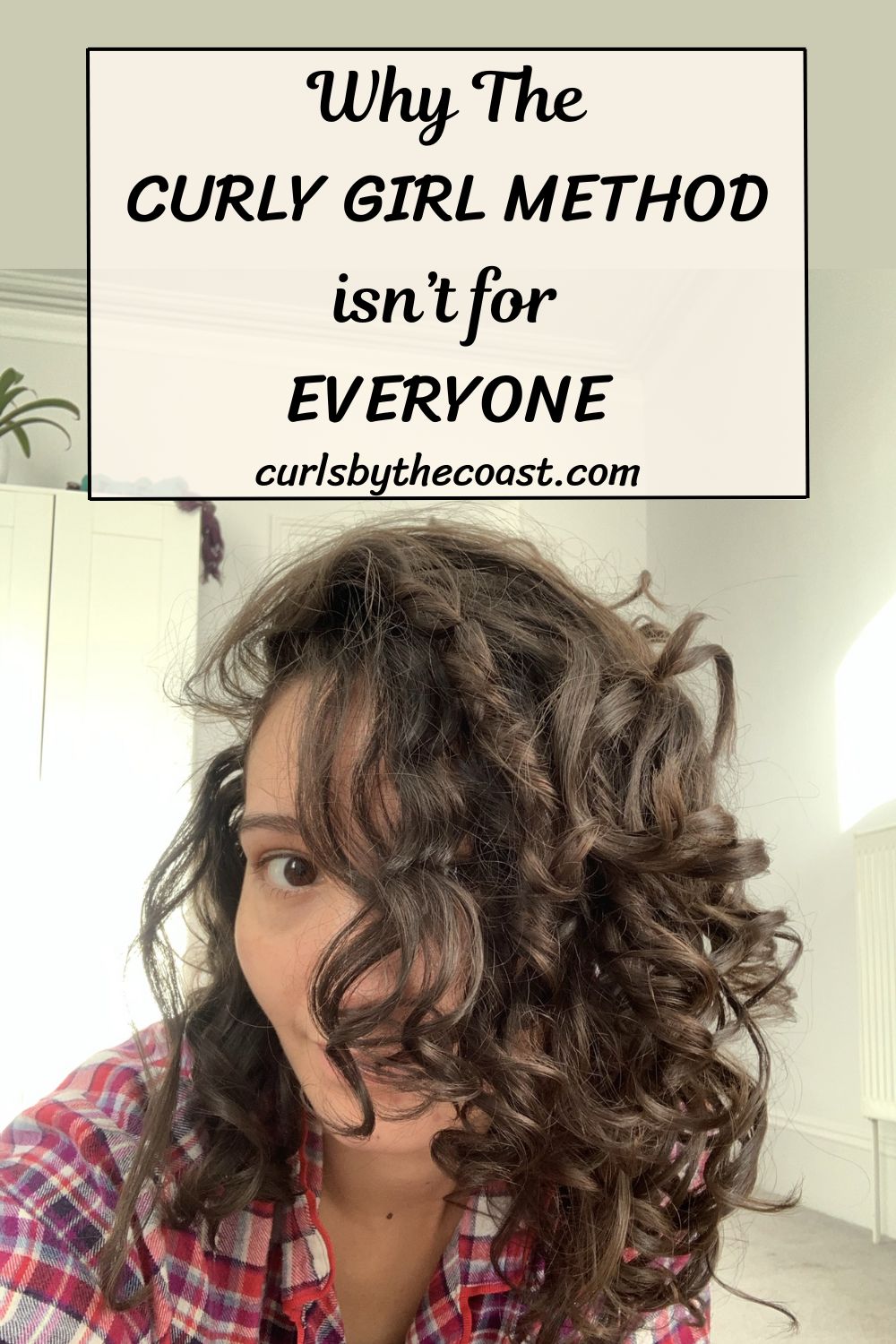
The fact of the matter is that this method doesn’t work for all hair types. I, for example, have fine hair and live in a soft water area; when I tried the true Curly Girl Method, my curls ended up lank and greasy and my scalp became flaky and itchy. I had to make changes if I wanted to keep my hair! So here’s what I do:
Occasionally clarifying and using sulphates
As mentioned, I tried cutting out shampoo and I tried co-washing, but it’s just not something that my hair and scalp enjoys for prolonged periods of time. My hair actually benefits from a proper shampooing – and rather than drying my hair out, it actually gives a good base for the rest of my routine. A big factor to remember in haircare is that products are made up of multiple ingredients. Just because a product contains a sulphate, it doesn’t automatically make it drying – it could contain a bunch of other conditioning ingredients alongside it.
That’s why, although I do mainly use sulphate-free shampoos now, I sometimes clarify my hair with a sulphate-containing shampoo, especially if I have been using lots of stylers. I definitely recommend including clarifying in your curly routine (more on this here!) but it is not mentioned in the original CG Method.
Occasionally using silicones
Silicones are nothing to be afraid of if you understand how they work! They are conditioning agents that coat the hair shaft to lock in moisture and prevent further moisture from entering. Each one varies in performance and wash-out-ability (is that a word?).
As I live by the coast with very changeable weather conditions, I personally find that my hair sometimes benefits from the extra protection of silicones. Since clarifying is part of my routine anyway, I don’t get buildup from using them.
Using brushes
This one’s easy: I hate the feeling of getting loose hair strands tangled round my fingers, and I struggle to get all tangles out of my hair with my fingers alone. I prefer to detangle my hair with a gentle brush while my hair is covered with conditioner, starting at the ends of my hair and ensuring I’m not pulling. Brushes can also help to distribute stylers evenly and create curl clumps!
To catch some of the strands that come out while washing, I sometimes detangle my dry hair first, using a little detangling spray or oil to give some slip. It is true that our hair is more fragile when it’s wet, and that overbrushing causes cuticle damage – but it is possible to still use brushes and be gentle, as long as you have lubricated your strands well enough first.
Not paying attention to alcohols
Like silicones, not all alcohols are the same: they are added to hair products for various reasons, such as to improve the consistency of a product, help it spread better, or help it absorb.
When people say “drying alcohols” they are referring to short-chain alcohols (e.g. Isopropyl alcohol, Ethanol, and Pronpanol alcohol). They’re often found in hairsprays and mousses. Their light structure means that they evaporate quickly, making the hair product dry quicker – but also stripping the hair of moisture too quickly in the process. Meanwhile long-chain or “fatty” alcohols (e.g. Cetyl alcohol, Cetearyl alcohol) can help add moisture and slip to your hair, and are often found in conditioners.
I personally don’t pay attention to alcohols in my products, but some curlies do find that their hair feels dry when they use products with drying alcohols high up the ingredients list. However, it’s worth noting that the further down the list the ingredient is, the smaller the amount is included in the product, and as Lorraine Massey says in her own book, “the [ingredients] near the very end are in such small amounts as to be meaningless.” 😉
Using heat
Of course, excessive heat such as the temperatures reached in straighteners can permanently damage our hair, making it brittle and dehydrated. However, lots of curly-haired people feel okay about using a higher heat setting or higher speed on their hairdryer because…well, we’re busy people. The point of diffusing is that it diffuses the air and heat, causing less direct damage – but you can use a heat protectant spray if you’re worried.
And sometimes air-drying for hours on end isn’t necessarily the safer option: this 2011 study found that hover diffusing (using a hairdryer at a distance of 15 centimeters) with continuous motion actually causes less damage than drying hair naturally.
Conclusion
I still think the Curly Girl Method is a great place to start if you have no idea what to do with your curly hair. It’s nice to have a clear set of instructions to follow! But part of the curly journey is to figure out both what you like and what actually works for your unique situation. And there is not much point blindly following a set of rules without understanding the reasoning behind them. Healthy curls includes keeping a clean scalp and protected strands, and if part of the CGM is preventing you from achieving this, don’t hesitate to make tweaks until you find a balance that works for you and your hair.
Edit: Since writing this post, I have attempted a washday following the strict CGM directions. Click the post below to see how it went!
 Curls by the Coast
Share your thoughts…